Indoor Teak Dining Room Furniture: Why Solid Teak Makes Sense Inside
Teak is most often associated with terraces, pool decks, yachts, and other demanding outdoor settings. That reputation can obscure a simpler point: a wood selected for its ability to cope with moisture, changing weather, and prolonged use is under far less stress once it comes indoors. That makes solid teak particularly well suited to dining […]
Teak is most often associated with terraces, pool decks, yachts, and other demanding outdoor settings. That reputation can obscure a simpler point: a wood selected for its ability to cope with moisture, changing weather, and prolonged use is under far less stress once it comes indoors.
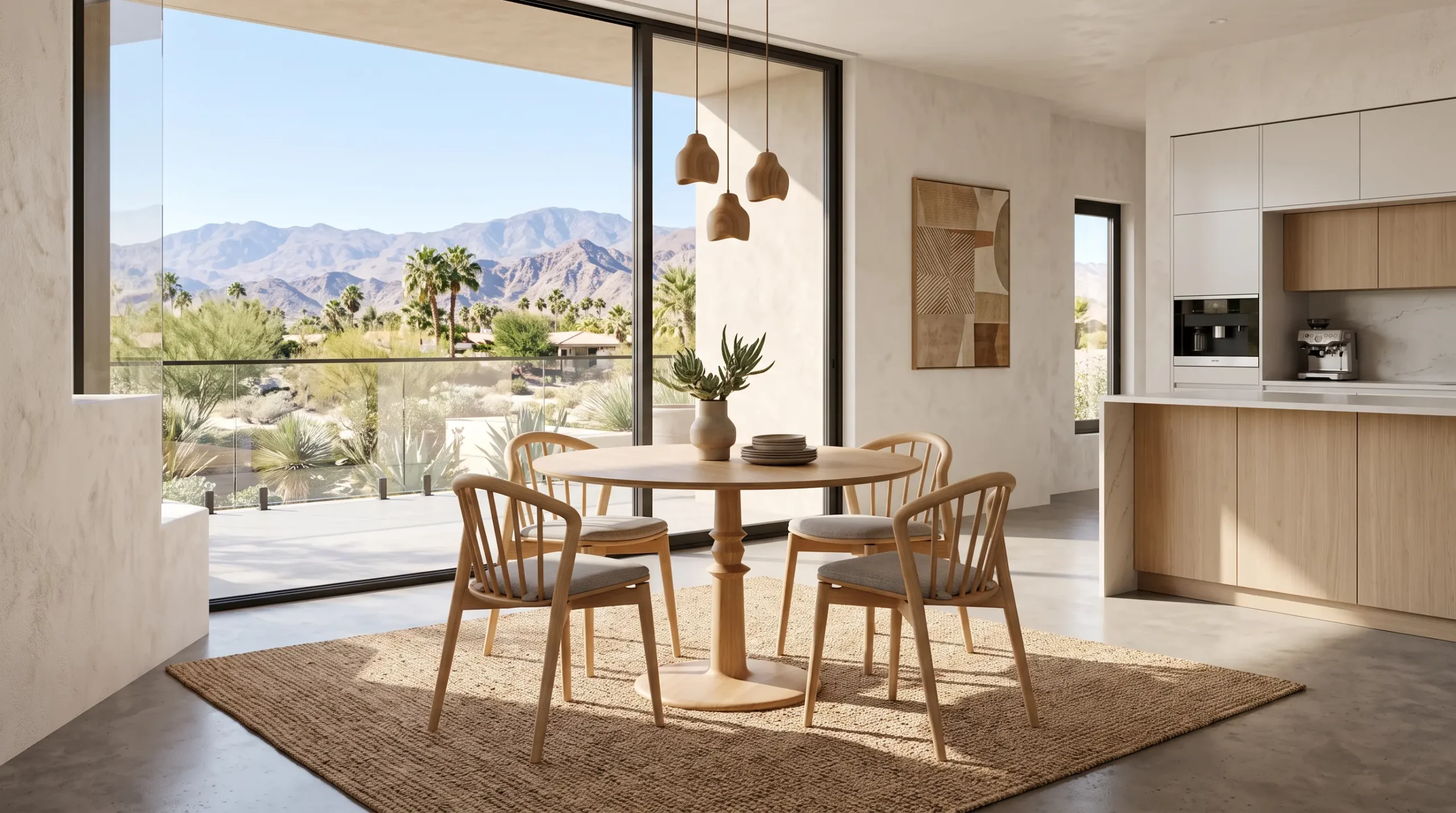
That makes solid teak particularly well suited to dining rooms, and it’s exactly why indoor teak dining tables have become one of the most requested pieces in our indoor line. A dining table still has to contend with spills, condensation, frequent cleaning, shifting humidity, and years of chairs being pulled in and out. But it does so without the constant exposure to rain and ultraviolet light that outdoor furniture faces. Indoors, many of teak’s practical strengths remain useful while the conditions working against the material are greatly reduced.
The result is not furniture that requires no care, but furniture that asks relatively little of its owner. For a room meant to be lived in rather than protected from use, that distinction matters.
Why Does Teak Hold Up So Well Indoors?
Teak’s reputation for durability comes from the character of the wood itself. It is a dense, dimensionally stable hardwood with naturally occurring oils that help it resist moisture. Those qualities have long made it useful where wood is expected to tolerate demanding conditions, and they’re the same qualities behind every one of our teak indoor dining room tables.
Indoors, those characteristics translate into a reassuring kind of durability. Seasonal changes in household humidity are far less severe than outdoor weather, spills can be wiped up promptly, and the surface is not continually exposed to sun and rain. A well-made solid teak table or chair therefore begins with material qualities that are arguably more robust than its indoor environment requires.
This is also where solid wood has a practical advantage over thin surface treatments or veneers: the material is teak through the section, not simply at the surface. Normal signs of use can often be addressed as part of the life of the piece rather than treated as the end of it.
What Changes in Teak’s Finish and Color Indoors?
Westminster Teak’s indoor solid-teak dining pieces use a water-based, non-VOC lacquer finish. The finish adds a protective layer against ordinary spills and helps preserve the warm golden appearance of freshly finished teak.
Outdoors, unfinished teak gradually weathers toward a silver-gray patina as it is exposed to ultraviolet light and rain. Indoors, that weathering process is largely absent, so the original color is much easier to retain. For anyone comparing a teak dining table indoor option against an outdoor piece, that finish is the main visible difference. The finish may still acquire the small marks and character associated with daily use, but maintaining the wood does not require the recurring outdoor-care decisions associated with weather exposure. For a full breakdown of how teak’s color evolves indoors, see Indoor Teak Furniture: What to Consider Before Bringing It Inside.
About the Editorial
The Furniture Journal provides market analysis and trend forecasting for our verified B2B partners. Our goal is to bridge the gap between Mediterranean craftsmanship and global retail needs.
Our Heritage